


When You Are Carrying Too Much. How Kambo can help you lighten the load.
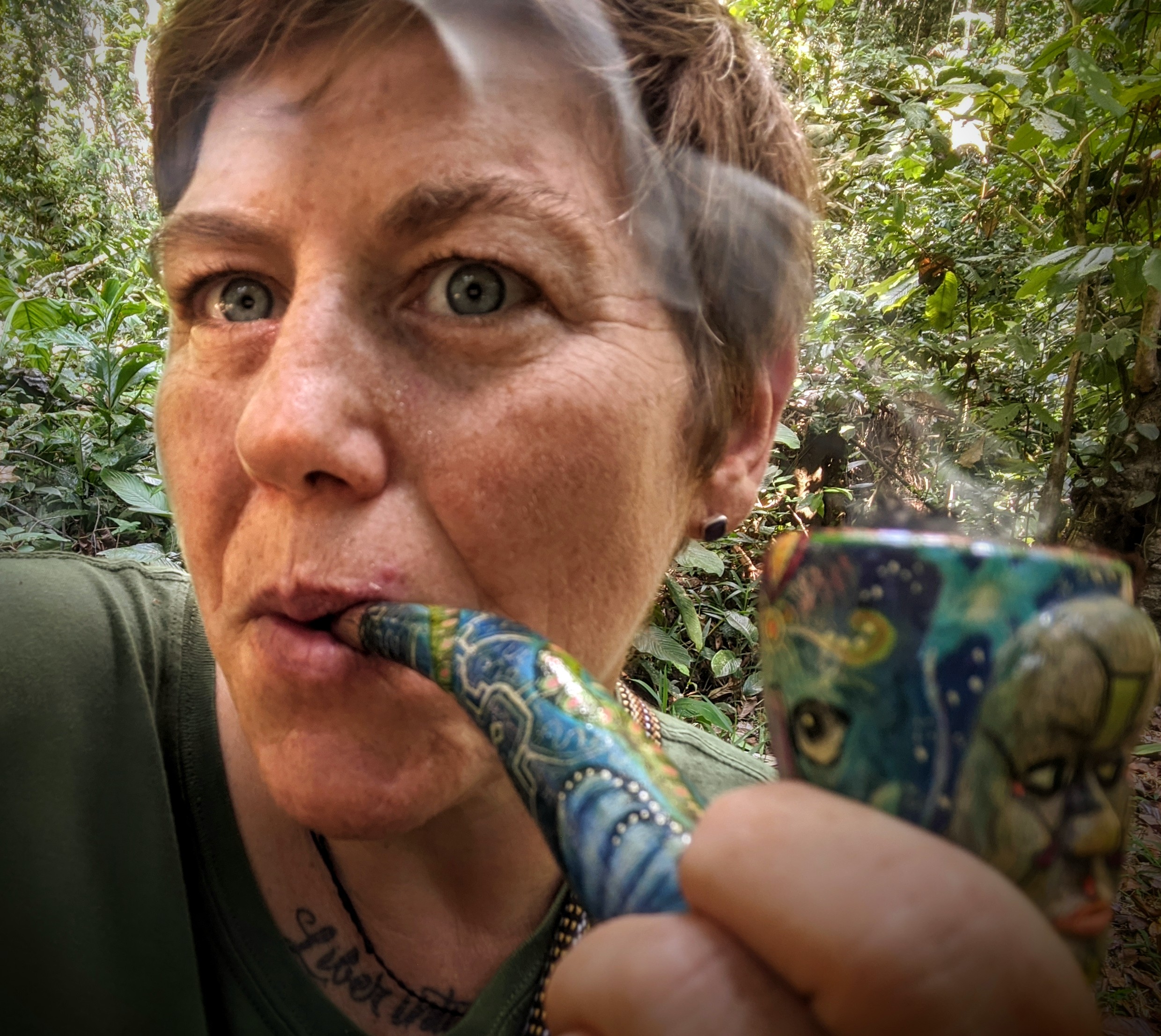

The first time I heard the word panema, I didn’t ask for a translation.
I was sitting in the forest, listening more than speaking. Someone had asked why they felt tired all the time — not just in the body, but in their spirit. Why life felt heavy even when nothing obvious was “wrong.”
The elder preparing the medicine paused and said quietly:
“You are carrying panema.”
There was no diagnosis. No analysis. No attempt to fix.
Just recognition.
Learning to See What Can’t Be Measured
Over the following years, I came to understand that panema is not dramatic. It is not a curse. It is not even necessarily illness.
It is accumulation.
It was explained to me this way: panema gathers the way smoke gathers in a house with no ventilation. Slowly. Invisibly. Through living.
It can come from:
Working without rest
Carrying grief that was never spoken
Conflict that never resolves
Repetition of the same emotional patterns
Poor food, poor sleep, overstimulation
Disconnection from God, nature, the rhythm of life, your humanity or community
Among the Huni Kuin, a hunter who repeatedly returns empty-handed is said to have panema. Not because he lacks skill — but because something in his alignment is off. His strength, focus, and connection have dulled.
In modern life, I see panema everywhere.
People don’t call it that. They say:
“I feel stuck.”
“I’m exhausted, but my labs are normal. There is nothing physically wrong with me.”
“I’ve lost my edge.”
“Something feels off.”
That “off” feeling — that is often panema.
It is heaviness in the nervous system. Fog in perception. Weight in the spirit.
Why Kambo Is Used
In the forest, Kambo is not trendy. It is practical.
It is applied:
Before hunting, to sharpen perception
After illness, to restore vitality
When someone feels chronically heavy or dull
When panema has settled too deeply
The medicine is direct. It does not whisper.
When Kambo enters the body, it creates an immediate physiological response — heat rises, the heart rate shifts, blood moves strongly, the stomach turns. The body purges.
From a biomedical perspective, peptides are stimulating immune, cardiovascular, and lymphatic systems.
From the traditional perspective, panema is being forced to move.
The purge is not punishment. It is propulsion.
What has been stagnant is suddenly mobilized.
How You Arrive Matters
One of the most important teachings I received was this:
The ceremony does not begin when the points are applied. It begins days before.
If someone arrives sleep-deprived, overstimulated, dehydrated, emotionally chaotic, or hiding medical conditions, they are already saturated with excess panema.
In the forest, preparation is simple:
Eat lightly.Avoid excess. Rest. Be honest.
Intention is not about manifesting an outcome. It is about orientation. When someone sits and acknowledges, This is where I feel heavy. This is what I’m ready to release, the body tends to cooperate.
Without that honesty, people often resist the very thing they came to clear.
When Panema Surfaces
During Kambo, panema does not exit politely.
It shows up as:
Heat and swelling
Nausea and purge
Sudden tears
Irritation
Insight
Memory
Sometimes people try to control it — to look composed, to manage the experience.
But the medicine responds best to surrender.
The people who soften into it often say afterward:
“I didn’t realize how much I was carrying.”
That sentence tells me everything.
After the Clearing
This is where modern culture struggles most.
After Kambo in the forest, no one rushes.
You rest. You hydrate slowly. You eat simply. You observe.
But in modern societies, people want to check their phones. Go to the gym. Have intense conversations. Make life decisions.
Panema returns fastest in exhaustion.
After ceremony, the nervous system is open. Sensitive. Recalibrating. If you flood it with stimulation, you layer new heaviness onto fresh space.
I tell everyone I serve:
Rest is not optional. Rest is part of the medicine.
The Subtle Days After
In the days that follow, something quieter happens.
People often report:
Clearer thinking
Connection with God and creative energy
Deeper sleep
Increased motivation
Emotional release
A sense of lightness
Sometimes grief surfaces after the intensity is gone. Sometimes relief.
This is integration.
Panema is not just physical residue. It can live in suppressed emotion, chronic stress loops, or ways of living that no longer align.
Kambo may clear the weight — but how you live afterward determines whether it returns.
The Real Teaching
A Huni Kuin Elder told me something years ago that I now repeat often:
“Panema is not bad. It is information.”
It tells you something is out of rhythm.
Kambo is not a miracle. It is a reset.
If you return to the same patterns — overwork, disconnection, poor nourishment, ignored emotion — the heaviness will slowly gather again.
But if you change how you move through life, the clearing can last.
After years of sitting with this medicine, this is what I know:
Kambo does not heal you. It reveals where balance has been lost. It removes what is ready to go.
The real work is how you live once the weight is gone.


Comments